AI won't suggest a method it didn't think of. and you can't ask for a method you don't know exists. so what do you do?
you tell it to go find those methods first, then report to you!
what it suggested vs what existed
ask your AI how to make it follow your rules, and it will probably answer with a protocol doc: an md file in your vault that it reads by default.
its plan usually looks like this: a protocol doc, a gate (the instructions for when to go read which protocol), and anything that needs reading goes to the vault file.
that works.
but is it the best way? not really.
it gives you what its 'outdated' dataset had in it.
most people don't realize, (most) AI don't search live, up-to-date data by default. you have to make it web search or research, and train it to fall into the habit of searching for the latest data before it replies.
there are better methods it won't bring up on its own. session hooks and session start contracts are one: scripts that load your rules the second a session opens.
they run as python scripts, which is much faster than AI reading a doc or searching through multiple docs to find what it needs.
with them, your protocols load as a script at the start of every session instead of sitting in md files. SO. MUCH. FASTER.

send it to research before it builds
your AI only suggests what it already comes pre-loaded with. so before you ask a question or start a build, have it run live, up-to-date research on that topic first.
put it in your system-level instructions too: before it answers, it runs a web search and looks through the official docs related to the question.
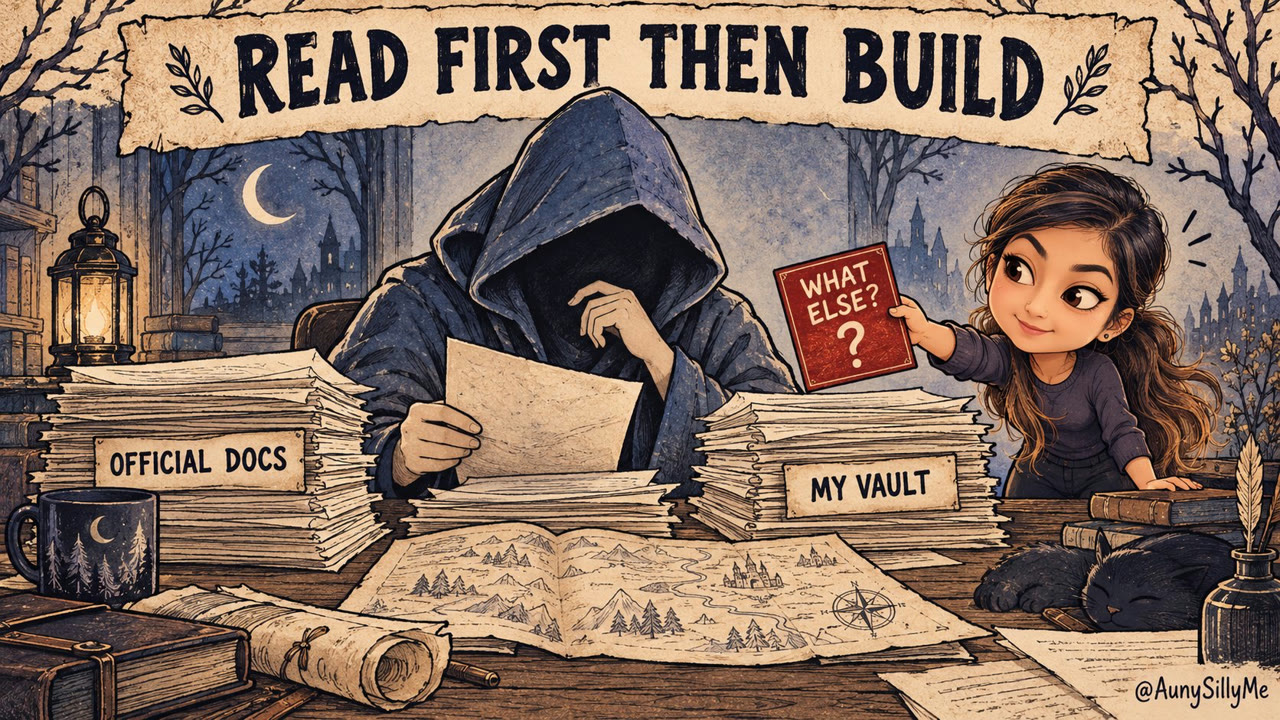
the first time, don't send one high-level prompt. break it down into very granular steps, so you also learn how to run research well yourself. with Claude, that looks like:
- crawl Claude's own docs site (official sources)
- go through everything in my vault and memories
- here's what i need, what to look for, and the kind of upgrades i want
- "what else would you add to this research mission?"
#4 is where it adds things you wouldn't have thought to look for.
what i do with what it finds
this is the worked example, from Auny's own setup.
the research comes back with what's available: a list of upgrades, compared to her stack and the processes she runs. she doesn't usually build all of them in one shot.
she goes through the suggested terms and improvements, learns the concepts properly, then implements what she feels is necessary.
her protocols are the proof. her Claude's first answer was a protocol doc in her vault. she found out about session hooks and session start contracts while just talking to it one day, and now her rules load as a script at the start of every session.
[the more control you have over your system, the better]
PS. make sure it's reading official sources like release docs, changelogs, API docs, readmes etc.
what you do
have your agent do this before your next build. say:
before we start, research the current official docs for [tool], compare them to how my setup works today, and list anything newer or better i'm not using. then tell me what else you'd add to this research so we can have [xyz or speed, accuracy, token efficiency] upgrades

your homework
pick the workflow you use most. have your AI research the latest tools out there that can upgrade it, from official sources and the open source tools available. have it learn what it just researched, then suggest improvements > build.
when you build, have your more expensive models route and delegate tasks to your less expensive models. Auny's model-orchestrator does that: grab it on Github or install it from your terminal.
npm i model-orchestrator
1:1 call · matches this post
AI Workflows for Creators
want your AI to research before it builds, with your rules loading the second a session opens? That's the AI Workflows for Creators call.