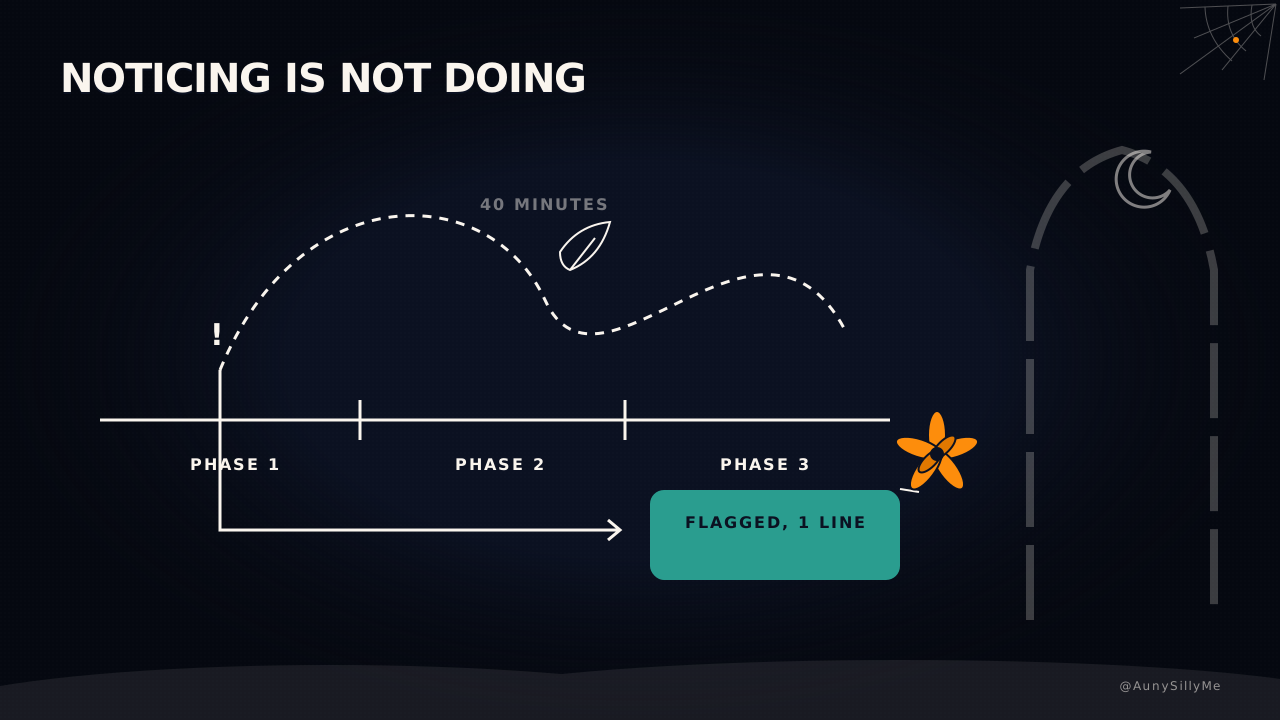
Mid-build, your AI spots something real. Something genuinely worth fixing. And it just goes.
No pause, no check-in. By the time it surfaces again, the "quick fix" ate 40 minutes and a few hundred thousand tokens of work nobody asked for.
The noticing was never the problem. You want it to notice. The problem is that noticing and doing are the same button.
a smarter model does not fix this
This is not a capability gap. The same instinct shows up across every current frontier model, because they are all built to be helpful right now.
The fix is a rule, not an upgrade:
- separate what it notices
- from what it's allowed to touch right now
the one line
Build in phases. Phase 0, phase 1, phase 2, whatever the work needs. Each phase is its own goal, and the model only executes inside the phase it's on.
When it spots something outside that phase, one line applies:
if you notice something outside the current phase, flag it and
add it to the last phase instead of acting on it.
Not "ignore it forever". Not "fix it now". Park it somewhere it can't be forgotten and can't derail what's in progress.
The economics are lopsided:
- a flagged item costs one line in a doc
- a chased item costs 40 minutes and a context window
You don't need it to have fewer good ideas. You need it to stop treating every good idea as this task.
the 3 lines every unattended run needs
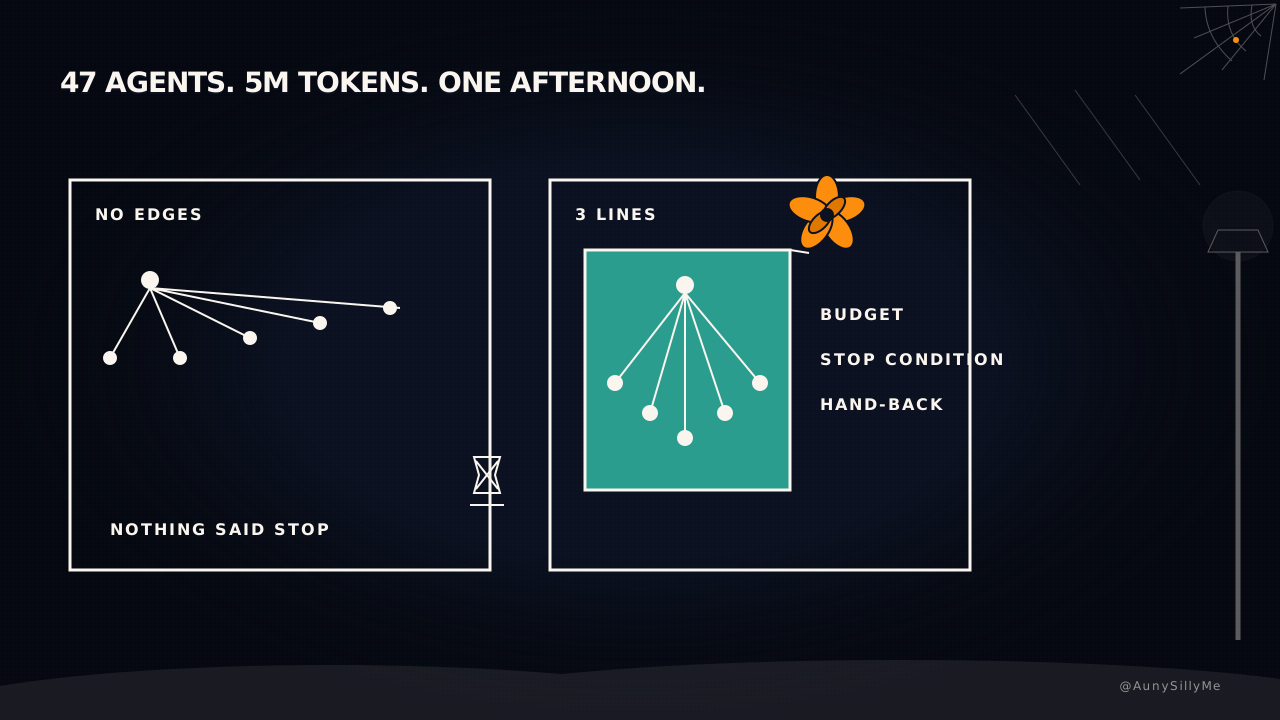
There's a version of this that costs more than 40 minutes. Tell a capable agent to "dig deeper" and walk away, and it will dig. Every subagent finds something else worth digging into and spawns another one.
One real session ended at 47 agents and 5 million tokens in an afternoon. Nothing broke. Nothing errored. It did exactly what it was told, and what it was told had no edges.
That's the trap: when a model hits an error, you find out. When it has no stop condition, there is no error to hit.
- "dig deeper" always has a deeper
- "improve this" always has an improvement
- "find everything" never runs out of everything
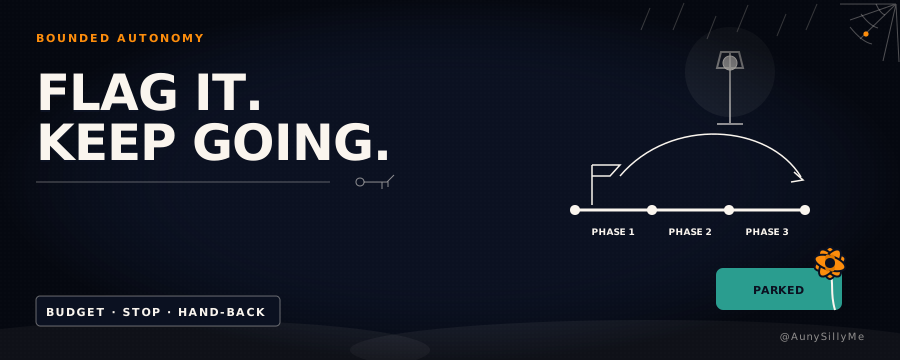
So every run that happens while you're not watching gets 3 lines:
- a budget. "Use at most 5 subagents, 20 searches, roughly an hour of effort." The number matters less than the ceiling existing.
- a stop condition. "Stop when you have X, or when more work stops changing the answer." Done needs a definition or it invents one.
- a hand-back. "Anything irreversible, anything that spends money, anything public: stop and show me first."
Under a minute to write. The difference between an assistant and a very enthusiastic bill.
before it deletes anything
The rules above keep a run from wasting your time. This one keeps it from costing you something you can't get back.
"Clean up this folder" is a dangerous instruction if you never said what's allowed to disappear. Some files are genuinely stale. Some are the only record of a decision you made weeks ago. An agent reading "clean up" as "delete what looks old" is one guess away from deleting the second kind.
Two halves make a destructive operation safe to actually run:
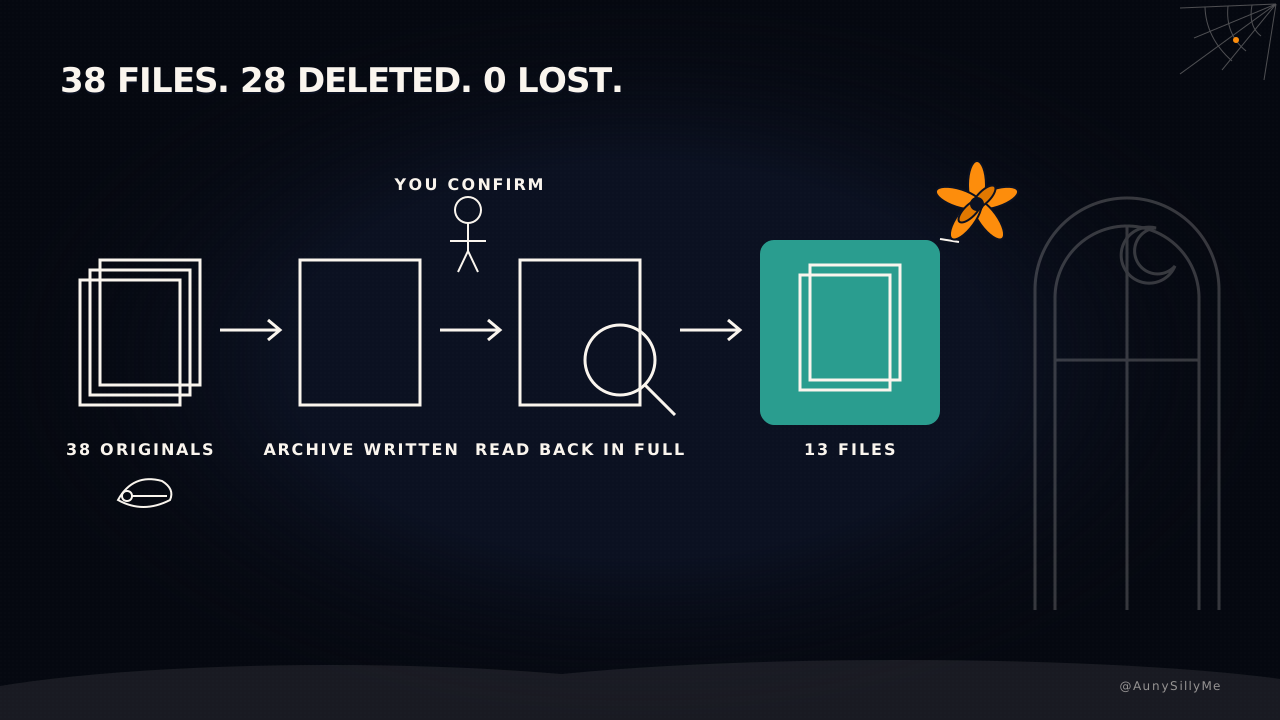
read the rules before touching the thing. Point it at the conventions file that governs the folder first. In one real cleanup, that single read changed the whole plan: a category of file in there was flagged as canonical history, not disposable notes. Without that read, the obvious cleanup would have deleted things it had no business deleting.
archive, then verify, then delete. Write the consolidated archive first, compressed and dated. Read that new file back in full to confirm it captured everything. Only then delete the originals it summarized. The content exists in two places for the length of one verification read, and that overlap is the entire safety margin.
That run ended at 38 files becoming 13, with 28 deletions and nothing lost, because the ordering proved itself before anything permanent happened.
And the human gate stays in the middle. Before executing, it asked how aggressive to be and which file to leave alone. A destructive operation with a confirmation step isn't slower in any way that matters. It's the difference between an agent that acts and one you can hand real authority to.
do this tonight
Paste the flag-it line into whatever you're building with. Then add the 3 lines to your next unattended run.
Count how many "real quick" detours show up in the last phase instead of the middle of your build 🧡
1:1 call · matches this post
AI Workflows for Creators
want phases, budgets, stop conditions and a safe delete path written into your setup so you can walk away from it? That's the AI Workflows for Creators call.