A new frontier model drops every other week. Half the timeline spends 48 hours arguing about which one is best. The other half migrates everything they've ever written into the new chat window, re-explains who they are, and starts from scratch.
There's a third path, and it's the one where you stop migrating and start swapping.
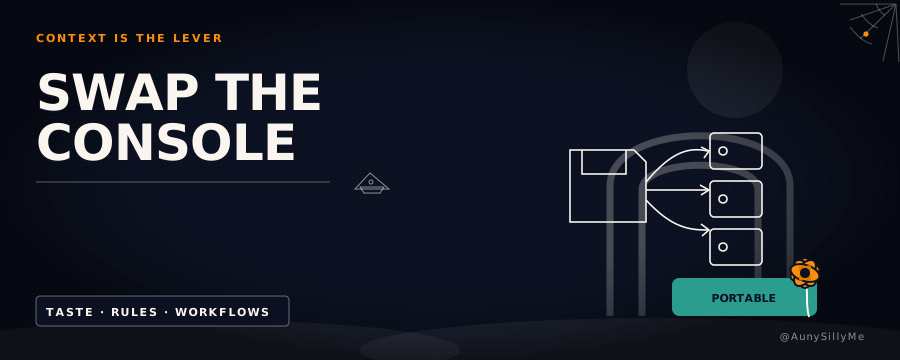
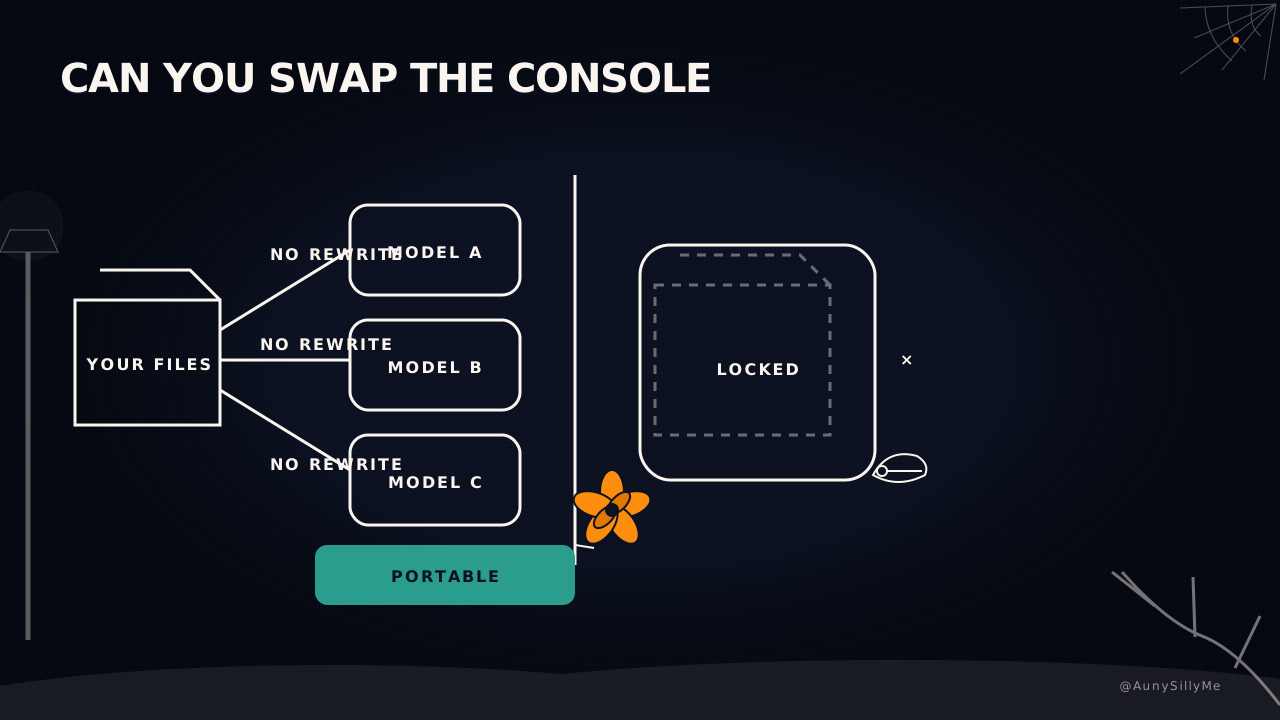
The model is the console. Your context is the memory card. If the card is portable, you keep your saves. If it's locked to one cartridge, you reset the world every time a new console ships.
the prompt stopped being the lever
The advice everyone trained on was write better prompts. That quietly stopped being the highest-leverage move.
The prompt is what you ask in the moment. The context is what the model knows about you before you ask. The context does most of the work, and most people are still hand-rolling it into every new chat.
You can spot it at the keyboard:
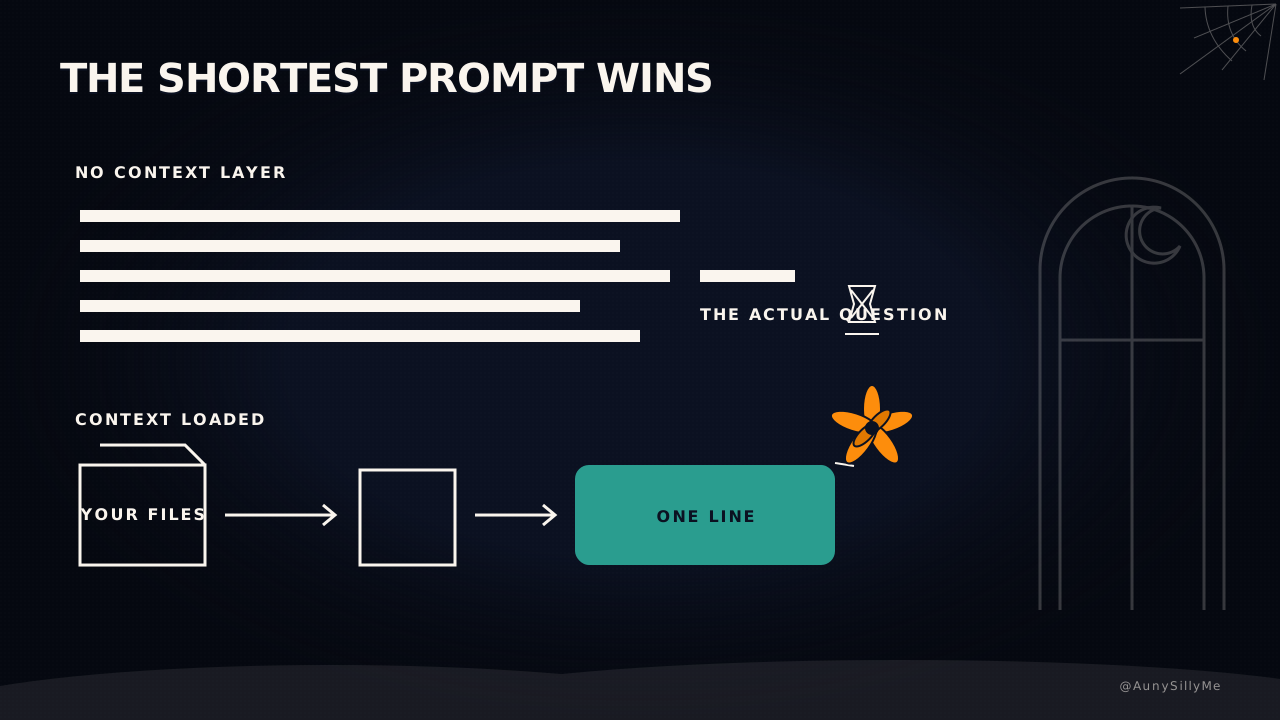
- someone without a context layer writes 5 paragraphs of setup at the top of every chat, explaining tone, constraints, tools, what they don't want, and by the time the real question lands they've burned thousands of tokens and lost the will to ask it
- someone with one asks the question in a single line
That gap isn't prompting skill. The second person's model walked in already knowing everything the first person was about to type.
The shortest prompt in the room usually belongs to the person with the most saved context.
what a context layer actually is
Strip the jargon. It's a folder of plain-text files describing:
- your taste, what you find good, bad and boring
- your rules, the things you never want, full stop
- your names, the canonical terms you use for your projects, products and characters
- your workflows, how you actually do the work, step by step
- your receipts, the real examples that prove the rest
That's it. Not magic, not a prompt-engineering technique. A knowledge base for one specific person, written in their voice, that a model reads before it answers.
The lightest version is one markdown file. The strongest version is a vault. Both beat re-explaining yourself.
the memory-card test
A context layer is portable if it unplugs from one model and plugs into another with no rewrite. One question settles it:
If a new model drops tomorrow, can you point it at the same files, the same paths and the same rules, and have it work?
Yes means you have a memory card. "I'd have to migrate everything into the new tool's format" means you have a save file locked to one cartridge, and you'll pay that migration again on the next release.
Plain files in a folder you own pass this test. A memory that lives only inside one product's settings does not.
remembering is not watching
Building a memory raises the obvious worry, so separate the two questions hiding inside it:
- does some AI somewhere hold a standing memory of who you are
- is this conversation, right now, being logged and read
Most sessions with most tools are gone when you close the tab, unless a memory feature is on or someone deliberately built something to write it down. The fear people describe, something quietly assembling a permanent profile, is opt-in tool by tool. It is not ambient.
The tell: can you point at the exact setting or system doing it. If you can't name it, you're worried about an idea rather than a mechanism.
A context layer you built is the opposite of being watched. You decided what gets kept, you know where it lives, and you can delete any of it today.
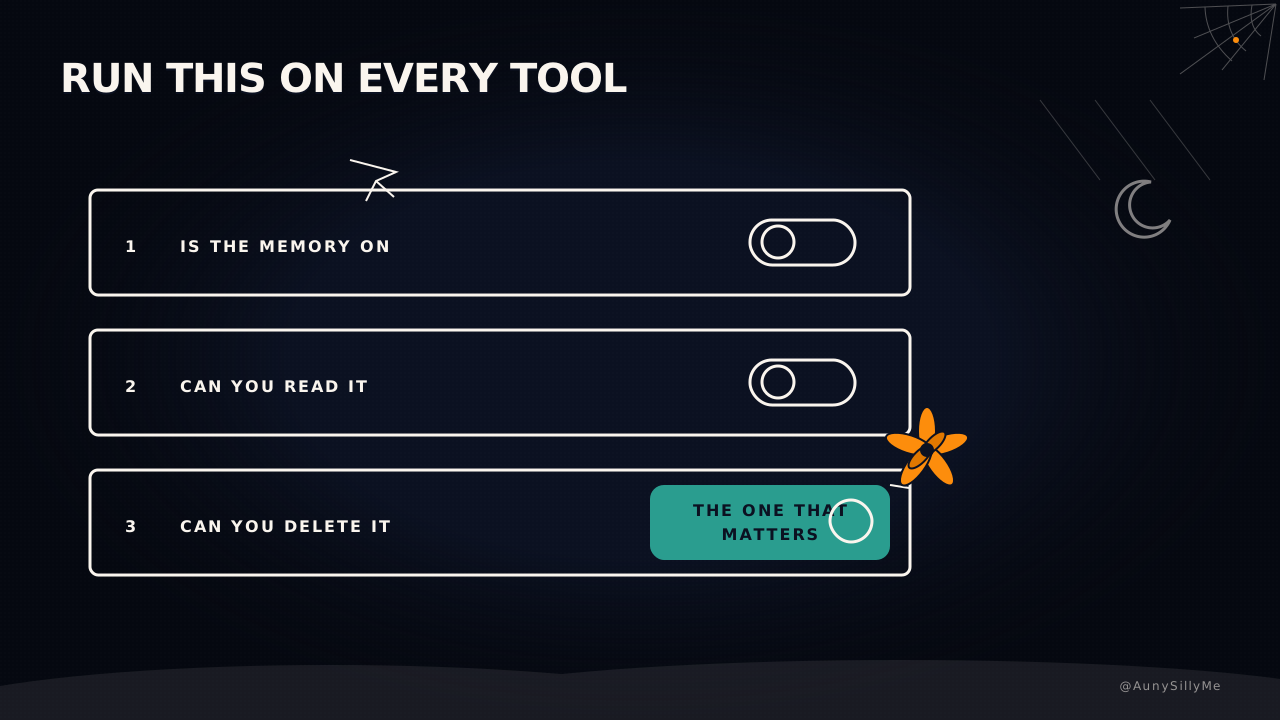
Run this on every AI tool you use daily:
- does it have a memory feature, and is it on. Most platforms say so plainly in settings. They just don't make you look.
- can you see what it remembers. If no, that's the red flag. Not the memory itself.
- can you turn it off or delete it. A memory you can't clear stopped being a convenience.
do this tonight
Open one plain text file. Write 5 lines: what you do, who you do it for, 3 things you never want in your writing, the names of your projects, and one link to your best work.
That file is version one of the card. Point your AI at it tomorrow and watch how much setup you stop typing 🧡
1:1 call · matches this post
AI Workflows for Creators
want your context layer actually built, portable, and readable by whatever model you use next? That's the AI Workflows for Creators call.